

Titanium boride powder is a highly valuable material known for its exceptional hardness and heat resistance. This ceramic compound plays a critical role in various industrial applications, from manufacturing cutting tools to providing protection against wear in high-stress environments. Its unique combination of properties makes titanium boride an essential choice for industries requiring durable and efficient materials.
The versatility of titanium boride extends to sectors such as aerospace, automotive, and electronics. For instance, it is utilized in electrode materials for welding and thermal spraying, showcasing its ability to withstand extreme conditions. Additionally, its metal-like conductivity aids in the development of semiconductors and superconductors, further highlighting its importance in modern technology.
Understanding the characteristics and applications of titanium boride powder can open doors to innovative solutions in material science. Readers will discover how this compound is synthesized, its advantages and limitations, and why it stands out among other materials in the field.
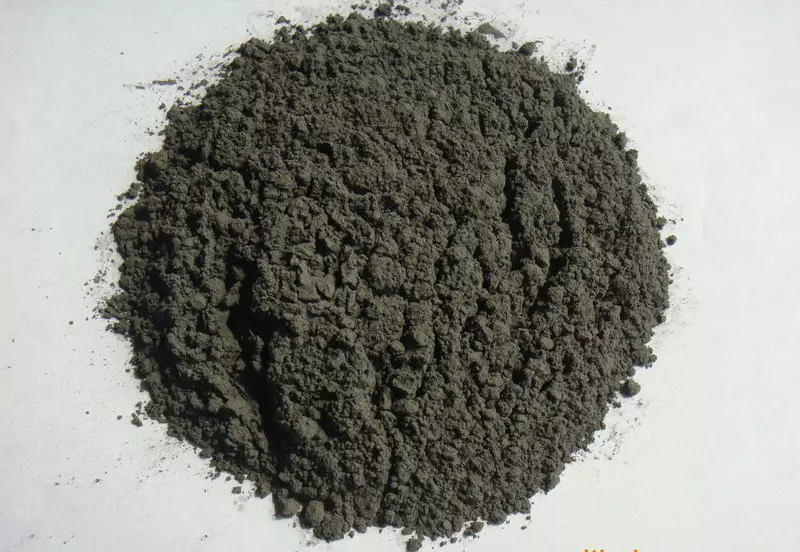
Properties Of Titanium Boride Powder
Titanium boride powder exhibits unique chemical and physical characteristics, making it valuable in various applications. Its composition, hardness, and thermal stability position it favorably among hard materials used in industrial settings.
Chemical Composition And Structure
Titanium boride (TiB₂) consists of titanium and boron in a stoichiometric ratio of 1:2. This binary compound crystallizes in a hexagonal structure, characterized by its strong covalent bonds. The chemical formula represents a stable arrangement that enhances its hardness and durability.
The material is known for its exceptional oxidation resistance, which can be attributed to its dense and stable crystal lattice. TiB₂ also has low electrical resistivity, allowing for efficient thermal and electrical conductivity, crucial for applications in electronics and high-temperature environments.
Physical Properties, Including Hardness And Thermal Stability
Titanium boride powder has remarkable physical properties. Its hardness, typically rated between 9 and 9.5 on the Mohs scale, makes it one of the hardest known materials. This property allows it to withstand significant wear and abrasion, making it ideal for cutting tools and wear-resistant coatings.
In terms of thermal stability, TiB₂ maintains structural integrity at high temperatures, with a melting point exceeding 2,800 °C. This stability makes it suitable for applications in aerospace and military sectors, where materials are subjected to extreme conditions. Additionally, its high thermal conductivity aids in heat dissipation in electronic components.
Comparison With Other Borides And Materials
When compared to other borides, titanium boride stands out due to its superior hardness and thermal stability. For example, boron carbide (B₈C) is also hard but loses structural integrity at higher temperatures.
Titanium boride displays better oxidation resistance than zirconium boride (ZrB₂), making it more suitable for high-temperature environments where oxidation might be a concern. Additionally, while tungsten carbide (WC) offers comparable hardness, titanium boride has the advantage of lower density, which can be beneficial in weight-sensitive applications.
This combination of properties makes titanium boride an attractive choice in sectors requiring durable and high-performance materials.
Applications Of Titanium Boride Powder
Titanium boride powder finds significant applications across various industries due to its unique properties, such as high hardness, thermal stability, and resistance to wear and corrosion. Its versatility allows it to be utilized effectively in cutting tools, electronics manufacturing, and aerospace and automotive sectors.
Use In Cutting Tools And Wear-Resistant Coatings
Titanium boride is widely used in the production of cutting tools due to its exceptional hardness and wear resistance. These properties enhance tool life and performance, making them suitable for machining hard materials. Cutting tools made from titanium boride demonstrate improved durability, resulting in fewer replacements and reduced downtime.
In addition to standalone tools, it is also used to create wear-resistant coatings. These coatings protect surfaces subjected to extreme wear conditions. Applications include drill bits, milling tools, and inserts where longevity and efficiency are crucial.
Role In Electronics And Semiconductor Manufacturing
In the electronics sector, titanium boride powder plays a critical role in the manufacturing of components. It is often utilized as a conductive material due to its excellent electrical conductivity. This makes it ideal for use in electrodes and conductive layers in various electronic devices.
Additionally, titanium boride can serve as a diffusion barrier material. This property ensures that different materials do not react adversely with one another during the semiconductor fabrication process. Its thermal stability also supports the demanding conditions found in semiconductor manufacturing.
Applications In Aerospace And Automotive Industries
The aerospace and automotive industries also leverage the properties of titanium boride powder. In aerospace, it is used in composite materials and surface coatings that need to withstand high-temperature and high-pressure environments. Its lightweight nature combined with strength contributes to fuel efficiency and performance.
In automotive applications, titanium boride is employed in brake linings, bearings, and other components requiring high wear resistance. The ability to maintain performance under extreme conditions enhances the durability of automotive parts, which is essential for safety and reliability.
Production Methods Of Titanium Boride Powder

The production of titanium boride powder involves several synthesis techniques, each with specific advantages and limitations. Understanding these methods is crucial for selecting the appropriate one based on desired application and material properties. Additionally, quality control measures play a vital role in ensuring the consistency and reliability of the produced powder.
Overview Of Synthesis Techniques
Titanium boride powder can be produced using various methods, including powder metallurgy, chemical vapor deposition (CVD), and sol-gel processes.
- Powder Metallurgy: This involves mixing titanium and boron powders, followed by sintering at high temperatures. It allows precise control over composition and microstructure.
- Chemical Vapor Deposition (CVD): In this technique, titanium tetrachloride (TiCl4) and boron sources react under controlled conditions, resulting in the deposition of titanium boride on a substrate.
- Sol-Gel Processing: This method uses a liquid phase to create titanium and boron precursors, which then gel and convert to titanium boride upon heating.
Each technique offers unique advantages influencing the final properties of the titanium boride powder.
Advantages And Disadvantages Of Different Methods
Analyzing the various production methods reveals distinct benefits and drawbacks.
- Powder Metallurgy:
- Advantages: High purity and good mechanical properties.
- Disadvantages: Higher production costs and time-consuming processes.
- CVD:
- Advantages: Excellent uniformity and control over layer thickness.
- Disadvantages: Equipment complexity and higher operational costs.
- Sol-Gel Processing:
- Advantages: Low processing temperatures and versatility in composite formulation.
- Disadvantages: Potential for contamination and challenges in achieving high densities.
Choosing the method depends on the intended application and required properties of titanium boride powder.
Quality Control Measures In Production
Quality control is essential in titanium boride powder production to ensure consistency and meet specific application requirements.
- Characterization Techniques: Methods such as X-ray diffraction (XRD) and scanning electron microscopy (SEM) are used to analyze the crystallinity, morphology, and particle size distribution.
- Purity Assessments: Techniques like energy-dispersive X-ray spectroscopy (EDX) evaluate the elemental composition to ensure minimal impurities.
- Mechanical Testing: Conducting tests on hardness, density, and thermal properties provides insights into the performance of the titanium boride powder.
Implementing strict quality control measures guarantees the production of reliable and high-performance titanium boride powders for various applications.
Conclusion
The significance of titanium boride powder is vast, impacting various industries through its unique properties. Its applications range from advanced ceramics to cutting-edge electronics. Examining its importance, future trends, and implications reveals its critical role in technology advancements.
Recap Of The Importance Of Titanium Boride Powder
Titanium boride powder is recognized for its exceptional hardness and wear resistance. These properties make it ideal for various applications, including cutting tools and armor materials. The thermal stability of titanium boride also contributes to its utility in high-temperature environments.
Moreover, it serves as a valuable additive in the production of composites, enhancing material strength and durability. Its development is crucial for industries focusing on innovation and efficiency, as it directly influences the performance of advanced materials.
Future Trends And Potential Developments In Its Applications
Emerging trends suggest a growing interest in titanium boride nanoparticle synthesis, which could enhance its applicability. Research indicates that nano-sized particles may improve material properties, leading to lightweight yet stronger composites.
Innovations in plasma synthesis methods are poised to make production more efficient and scalable. Additionally, the incorporation of titanium boride in 3D printing processes could revolutionize manufacturing, allowing for precise creation of complex geometries with superior performance characteristics.
Final Thoughts On The Role Of Titanium Boride Powder In Advancing Technology And Industry
Titanium boride powder is positioned to play a pivotal role in the evolution of materials science and engineering. Its unique attributes are essential for developing the next generation of high-performance materials.
As technology continues to advance, the demand for innovative solutions will increase. Titanium boride powder is likely to meet these needs, establishing its importance in future technological and industrial developments. Its versatility ensures that it will remain a focal point in research and applications for years to come.