
Scandium Metal Properties
| Material Type: | Scandium Metal | Melting Point (°C): | 1541 °C | ||||
|---|---|---|---|---|---|---|---|
| Symbol: | Sc | Boiling Point (°C): | 2836 °C | ||||
| Atomic Number: | 21 | Density: | 2.985 g/cm3 |
Scandium Metal Introduction
Scandium is a chemical element with the symbol Sc and atomic number 21. Its color is silvery-white metallic and it is d-block element. It historically has been classified as a rare earth element, together with the yttrium and the lanthanides. It was discovered in 1879 by spectral analysis of the minerals euxenite and gadolinite from Scandinavia. It develops a slightly yellowish or pinkish cast when exposed to air. Scandium tarnished in air and burn easily once it is ignited. It reacts with water to form hydrogen gas and dissolve in many acids.
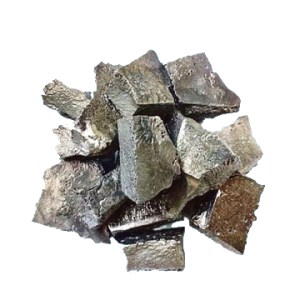
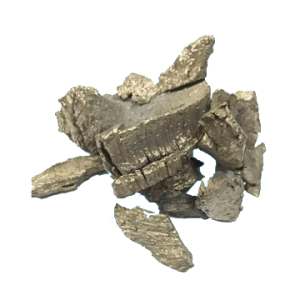
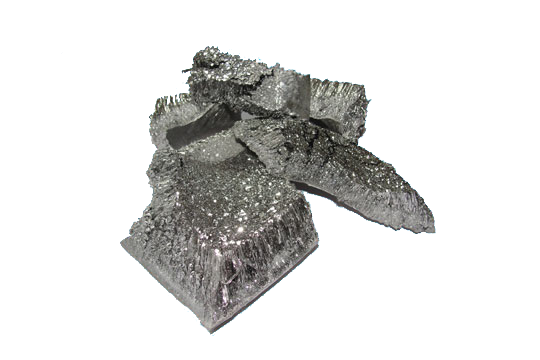
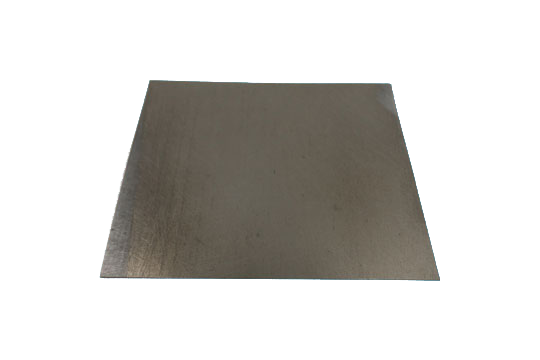
Pure scandium is produced by heating scandium fluoride (ScF3) with calcium metal. Two different production methods are the distillation method and the reduction method. The distilled scandium has better quality than the reduced one. The distilled scandium is dendritic like a crystal of metallic luster. However, the reduced one is broken into irregular pieces. Scandium metal is available in powder, sheet, piece, foil, wire, and sputtering target forms.
Scandium metal is lightweight, but the melting point is much higher than aluminum. It could replace aluminum to make various aircraft. It is a raw material for high-melting alloy, for example Al-Sc alloy, Mg-Sc alloy, Sc-Ti alloy. It can apply to a space shuttle, rocket, and other high-end purposes. Except these, scandium is additive for steel, tungsten, and chromium alloy. The main application by volume is aluminum-scandium alloys for the aerospace industry and sports equipment, including sports (bikes, baseball bats, etc.) that rely on high-performance materials. It has been shown to reduce solidification cracking during the welding of high strength aluminum alloys. Scandium plays a vital role in the third-generation Illuminant that is a scandium sodium lamp. It is a kind of metal halide lamp that fills with sodium iodide and scandium iodide and, simultaneously, scandium and sodium foil in the lights. Scandium is used in household equipment such as color televisions, fluorescent lights, energy-saving lights, and glasses. Scandium metal is the best barrier metal in metal-insulator-semiconductor silicon photocell and solar cells. The use of scandium is still growing because it is suited to produce catalyzers and to polish glass.
Scandium Metal Features
1. Soft metal with a silvery appearance
Scandium Metal Shapes
Sputtering target, powder, sheet, foil, rod, wire, or custom shapes.
Specifications of Scandium Metal
| Description | Specification | ||||||
|---|---|---|---|---|---|---|---|
| Scandium Metal Lump, Sublimed dendritic, Ingots, Granules, Pellets |
Sc/TREM >99.999%, TREM >99.95%, Reduction Scandium, Distilled Scandium | ||||||
| Scandium Metal Sputtering Target Disks, Plates, and other shapes. |
Sc/TREM >99.999%, TREM >99.95%, Max diameter: 14 inch, Min thickness: 0.05mm | ||||||
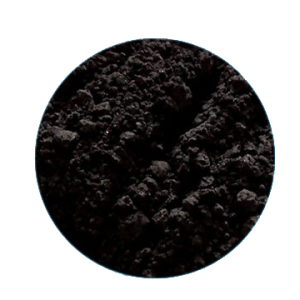
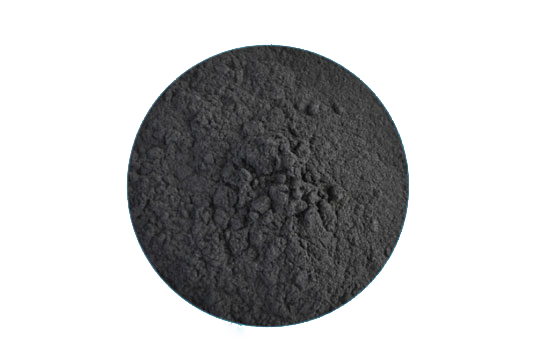
| Scandium Metal Powder | 99.9% purity, -100 mesh, -200 mesh | ||||||
| Scandium Metal Foil | Sc/TREM >99.999%, TREM >99.95%, Thickness: 0.05 ~ 15mm, Width: 5 ~ 400mm | ||||||
| Scandium Metal Rod & Wire | Sc/TREM >99.999%, TREM >99.95%, Min diameter: 0.5mm |
Scandium Metal Purity
3N, 4N, 3N and low oxygen, 4N and low oxygen
Packaging of Scandium Metal
Scandium metals are tagged and labeled externally to ensure efficient identification and quality control. Great care is taken to avoid any damage which may cause during storage or transportation.