Vanadium Carbide Powder
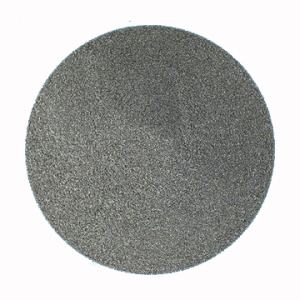
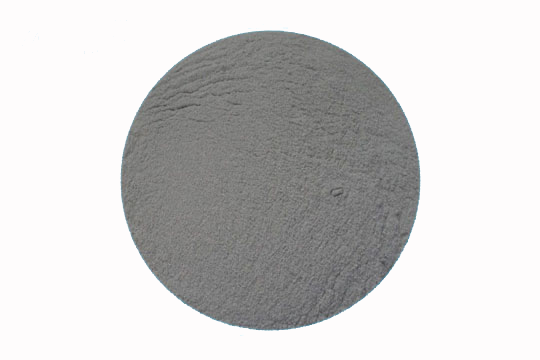
A fine gray metallic powder, this refractory ceramic material cannot be extremely hard and chemically stable. It is ideal for high-temperature applications because of its high melting point and other versatile thermal properties. It is frequently used in combination with other carbides as an additive. Vanadium Carbide powder maintains a cubic crystal structure and is possibly the hardest known metal carbide, ranging from 9 to 9.5 Mohs.
Chemical Composition of Vanadium Carbide Powder
| Grade | FXVC-01 | FVC-1 | |
| Carbon Content | Total Carbon | ≥17 | ≥16 |
| Free Carbon | ≤1.3 | ≤0.8 | |
| Impurity Content(≤) | N | 0.2 | 0.2 |
| O | 1 | 0.6 | |
| Si | 0.1 | 0.15 | |
| Fe | 0.1 | 0.15 | |
| Na | 0.01 | 0.01 | |
| Ca | 0.05 | 0.05 | |
| Al | 0.02 | 0.02 | |
| Fsss(μm) | ≤1.5 | 1.5<Fsss≤4.0 | |
Vanadium Carbide Powder Applications
• Tools and abrasives: Like many of its related refractory ceramics, Vanadium Carbide is frequently used to produce extremely hard, wear-resistant surfaces for cutting tools, bits, and other mechanical surfaces prone to extreme wear and tear.
• Metallurgy: Given its unique hardness, and corrosion resistance, Vanadium Carbide powder is frequently used as an additive in alloys. In particular, it’s utilized to produce tungsten carbide to improve the cermet by refining the carbide crystals.
• Coatings: Like many carbide powders, Vanadium Carbide powder is frequently used to produce extremely hard coatings for high-stress applications. Appropriately treated, a material coated with Vanadium Carbide is up to twice as hard as one with a cemented carbide coating.