
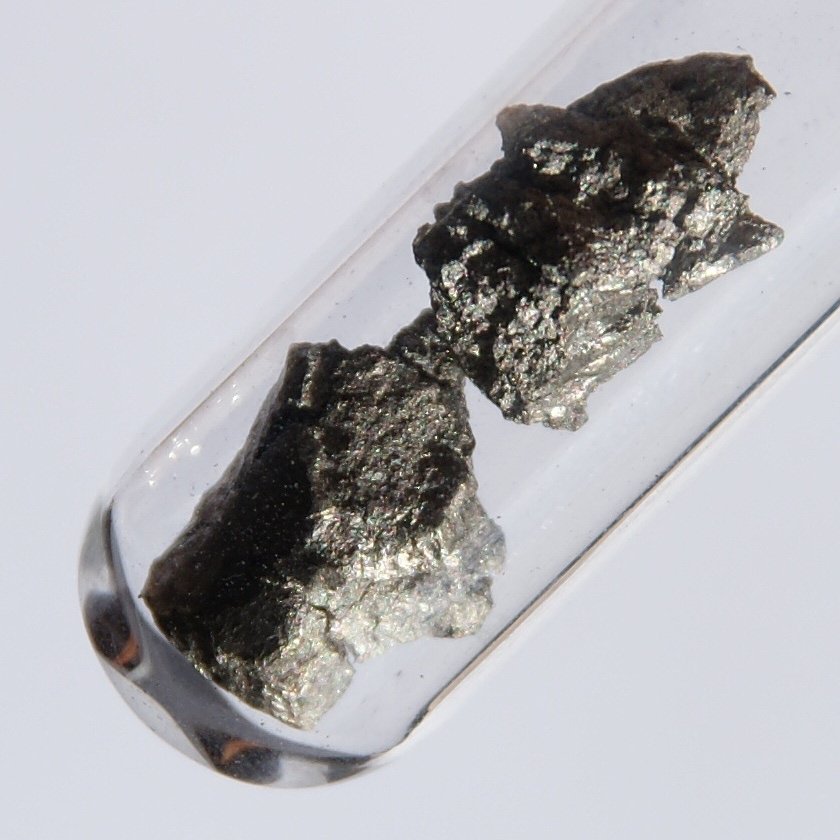
On a purchase order, “zirconium” and “zirconia” differ by a couple of letters, yet they describe two very different materials. One is a metal you can weld, machine and roll into sheet; the other is an oxide that only becomes useful once it is pressed and sintered into a ceramic. Zircon, a third name that often slips into the same conversation, is the mineral both of them come from.
Zirconium (Zr) is a silver-grey transition metal with a density of about 6.5 g/cm³ and a melting point of roughly 1855 °C. Its main selling point is corrosion resistance: zirconium holds up against alkalis, acids and seawater, which is why it shows up in chemical processing equipment and, as zirconium alloys, in the cladding of nuclear fuel rods. For a metal stock buyer, it behaves like other reactive specialty metals: it comes as bar, plate, sheet, wire or powder, and it is cut, formed and joined with metalworking methods.
Where the Names Come From
Most zirconium starts life as zircon, a zirconium silicate (ZrSiO₄) recovered from mineral sands, with baddeleyite as a naturally occurring oxide. The metal itself is produced by reducing zirconium tetrachloride with magnesium, the Kroll process, which replaced the older crystal-bar method in 1945. Commercial zirconium usually carries 1–3% hafnium, because the two elements are chemically almost identical. That matters in one market above all: hafnium absorbs neutrons about 600 times more readily than zirconium, so nuclear-grade material has to have its hafnium removed, while industrial grades can leave it in.
Zirconia is zirconium dioxide (ZrO₂), a white ceramic with a melting point of 2715 °C. Pure zirconia is awkward to use because it changes crystal structure as it cools, moving from cubic to tetragonal to monoclinic, and the volume change on that last step cracks sintered parts. Adding about 3 mol% yttria keeps the material in a metastable tetragonal form at room temperature, and the result is far tougher: when a crack starts, the stressed zirconia near its tip switches to monoclinic, expands, and squeezes the crack shut, a mechanism called transformation toughening.
Engineers borrow the same effect by dispersing fine zirconia particles, typically 10–20%, through an alumina matrix. The reference page on zirconia toughened alumina explains where that blend sits between plain alumina and full zirconia in toughness and cost, and why it suits pump parts, valve components, nozzles and wear liners.
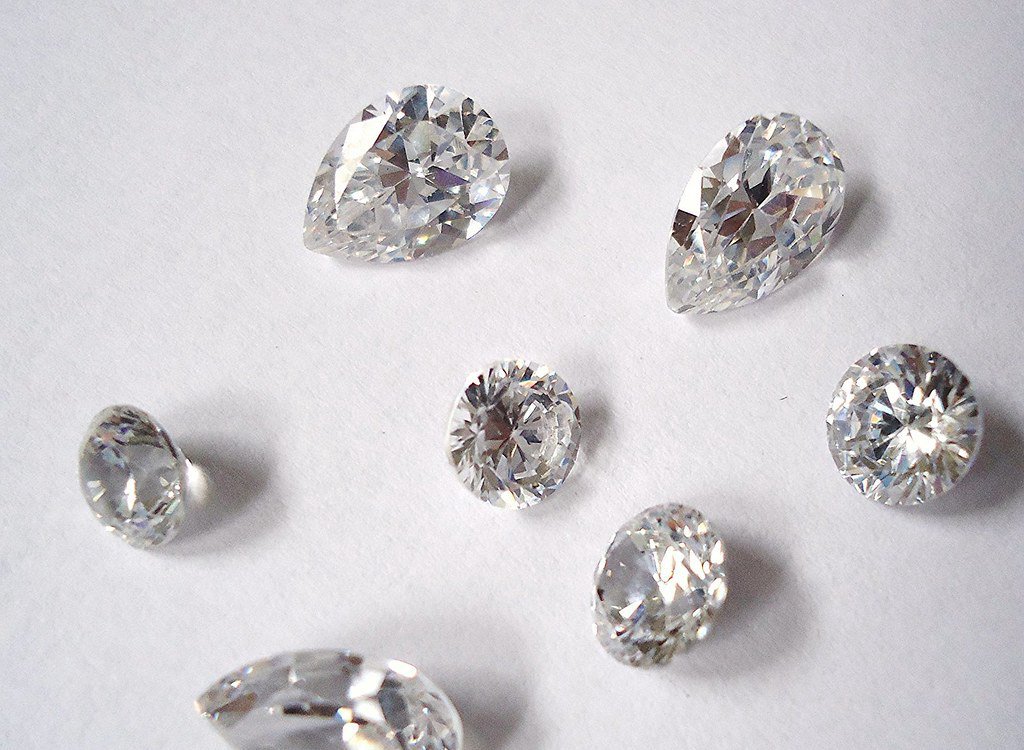
Outside wear parts, zirconium dioxide turns up in dental restorations, thermal barrier coatings, oxygen sensors and ceramic knives. Its cubic form, grown as single crystals, is the familiar diamond simulant known as cubic zirconia. It is often mislabelled “zircon”, which only adds to the confusion, since natural zircon is the silicate mineral and a separate gemstone in its own right.
Density: Metal vs Oxide vs Alumina
Weight is where the three materials separate most clearly on a specification sheet. Zirconium metal comes in at about 6.5 g/cm³, zirconia at 5.68 g/cm³, and aluminium oxide at a theoretical 3.987 g/cm³, so a part of the same volume made in alumina is close to 40% lighter than one in zirconium and about 30% lighter than one in zirconia. Real sintered alumina falls a little short of that theoretical figure because of residual porosity, which depends on grain size and firing, and lower-purity grades sit lower still; a grade-by-grade table of the density of alumina runs from the 95% grades up to 99.99%.
Density is only one line on the comparison, though. Aluminium oxide melts at 2072 °C, well below zirconia, and most of the world’s output goes into making aluminium metal rather than ceramic parts. Zirconia, for its part, is chemically inert and hard but brittle in the way all ceramics are. Zirconium metal is softer yet ductile, conducts electricity, and can be welded, threaded and repaired. A ceramic part, by contrast, is shaped before firing and finished by grinding, so a metal grade designation does not translate to a ceramic supplier, and the reverse is just as true.
What This Means for Metal Stock Buyers
Most mix-ups start with a request for quotation that names the material but not its form. Writing the chemical identity alongside the trade name, Zr for the metal or ZrO₂ for the ceramic, removes the ambiguity in one step. The form should follow straight after: bar, plate, foil, wire or spherical powder for the metal; powder or finished sintered parts for the ceramic. If the metal is destined for nuclear service, the hafnium limit has to be stated, because standard commercial zirconium will not meet it.
For ceramic parts, the useful details are different. State the stabiliser, for example 3 mol% yttria, and give a minimum density, since density tracks porosity and porosity tracks strength. If the job is really a wear part that keeps chipping in plain alumina, say so: a supplier may suggest a zirconia-toughened grade instead of a full zirconia part, which changes both the weight and the price conversation.
Deciding between the two comes down to the job. If the part needs to conduct, flex, be welded into an assembly or resist most acids and alkalis, zirconium metal is the candidate. If it needs to be hard, wear-resistant and stable at high temperature, a zirconia or alumina ceramic is the better fit, with alumina the usual choice where electrical insulation matters. Get the name and the chemical formula right on the first request, and the quotes that come back will describe the same material, so they can be compared like for like.