
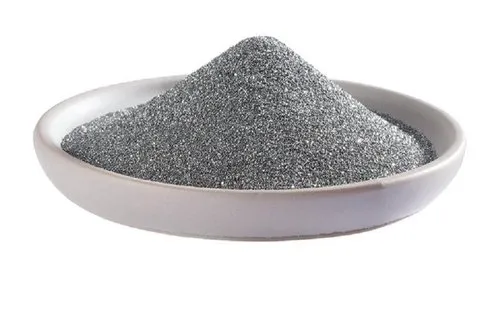
Tungsten carbide powder plays a crucial role in various industrial applications due to its exceptional hardness and durability. This fine gray powder is utilized in manufacturing cutting tools, abrasives, and wear-resistant parts. Its unique properties make it a preferred choice for industries ranging from mining to manufacturing.
The powder is composed of equal parts tungsten and carbon, which results in a compound that excels under high-stress conditions. Companies like Kennametal and H.C. Starck provide an array of tungsten carbide powders tailored for specific needs, illustrating its versatility in meeting different operational demands.
As industries continue to seek advanced materials that enhance performance and longevity, tungsten carbide powder remains a key player. It serves not only as a fundamental component in tool production but also as a vital solution for improving productivity across various sectors.
Properties Of Tungsten Carbide Powder
Tungsten carbide powder possesses a range of properties that contribute to its versatility and utility in various applications. These characteristics include its physical and chemical traits, exceptional hardness, and durability compared to other materials.
Physical And Chemical Characteristics
Tungsten carbide powder is a chemical compound consisting of equal parts tungsten and carbon, represented by the formula WC. In its raw form, it appears as a fine gray powder with significant density, typically measuring around 15.6 g/cm³.
It is stable and inert under most environmental conditions, showing resistance to oxidation and various chemical agents. Melting Point: The melting point of tungsten carbide is approximately 2,870°C (5,220°F). Boiling Point: The boiling point is around 5,600°C (10,112°F).
These characteristics make it suitable for high-temperature applications. When subjected to high pressures, the powder can be sintered to form solid objects that maintain excellent integrity under extreme mechanical stress.
Hardness And Durability
One of the most notable properties of tungsten carbide powder is its exceptional hardness. It ranks about 9 on the Mohs scale, second only to diamond. This hardness makes it ideal for manufacturing cutting tools, drill bits, and abrasives.
Its resistance to wear is also remarkable, allowing it to perform effectively in demanding environments. Tungsten carbide is 2-3 times harder than steel, which significantly contributes to its longevity and reliability in industrial applications.
In addition, it exhibits excellent compressive strength, making it less likely to deform under heavy loads. This durability ensures that tools made from tungsten carbide can withstand rigorous usage without sacrificing performance.
Comparison With Other Materials
When compared to other materials, tungsten carbide stands out due to its unique combination of properties. For instance, while ceramics offer high hardness, they often lack toughness. Tungsten carbide bridges this gap, providing both hardness and durability.
In contrast to steel, tungsten carbide is significantly harder and resists wear more effectively. Although steel can be tough, it is not as resistant to abrasion as tungsten carbide.
Alumina, another hard material, cannot match the overall toughness and mechanical properties of tungsten carbide. The strength-to-weight ratio of tungsten carbide also provides advantages in applications where weight is a factor.
These comparisons highlight why tungsten carbide is frequently chosen for applications requiring superior wear resistance and longevity.
Applications Of Tungsten Carbide Powder
Tungsten carbide powder is integral to a variety of industries due to its hardness and durability. Its unique properties make it essential in manufacturing, mining, and oil extraction, among other applications.
Use In Manufacturing Cutting Tools
Tungsten carbide powder is widely used in cutting tools, including drills, saw blades, and milling machines. Its hardness allows these tools to cut through tough materials like stainless steel and titanium with ease.
Cutting tools made from tungsten carbide maintain their sharpness for longer periods compared to tools made with other materials. This longevity reduces downtime and increases productivity in manufacturing processes.
The production involves sintering tungsten carbide powder with cobalt, forming a tough composite that withstands high temperatures and wear. This combination enhances performance, making these tools a preferred choice in precision engineering.
Role In The Production Of Wear-Resistant Components
Tungsten carbide powder is critical for creating wear-resistant components across various industries. These components include bearings, valve seats, and piston rings.
The exceptional resistance to abrasion and impact makes parts produced from tungsten carbide suitable for high-stress applications. Items manufactured from this material last longer, reducing replacement costs and maintenance intervals.
Using tungsten carbide powder in these components ensures they perform effectively even under extreme conditions. The material’s ability to maintain hardness at high temperatures is particularly beneficial in automotive and aerospace applications.
Applications In The Mining And Oil Industries
In the mining and oil industries, tungsten carbide powder is often used for drilling equipment and cutting tools. Tools made from tungsten carbide are capable of penetrating hard rock formations, thus enhancing extraction efficiency.
Drill bits featuring tungsten carbide tips can endure harsh conditions found during drilling operations. This durability leads to increased operational uptime and lower costs due to reduced equipment wear.
Moreover, the adaptability of tungsten carbide allows it to be used in various applications, including earth-moving machinery and refining equipment. This versatility makes it a valuable asset in managing resource extraction effectively.
Production And Processing Of Tungsten Carbide Powder

The production and processing of tungsten carbide powder involve various methods and techniques to ensure high quality and performance. Key areas of focus include synthesis methods, processing techniques, and quality control measures.
Methods Of Synthesis
Tungsten carbide is primarily synthesized through several methods. The most common approach includes the reduction of tungsten oxide (WO3) with hydrogen. This step converts WO3 into metallic tungsten, which is then reacted with carbon to form tungsten carbide.
Another method involves the carbothermal reduction of tungsten trioxide, where carbon acts as a reducing agent. Chemical vapor deposition (CVD) is also utilized for producing tungsten carbide films, enabling precise control over thickness and composition.
Hydrothermal processes are emerging as newer alternatives, promoting nanosized particle formation. These methods allow for the development of high-purity tungsten carbide with tailored properties.
Techniques For Powder Processing
Once synthesized, tungsten carbide powders undergo various processing techniques. These include milling, sieving, and sintering. Milling breaks down larger agglomerates into finer particles, enhancing the uniformity and reactivity of the powder.
Sieving ensures that only particles within the desired size range are used, which is crucial for consistent properties in end products. Sintering follows, where the powder is compacted and heated to form solid structures.
This process significantly affects the mechanical properties and density of the final product. Advanced spark plasma sintering can further improve these characteristics by enabling fast consolidation with minimal grain growth.
Quality Control Measures
Quality control is vital in the production of tungsten carbide powder. Techniques such as X-ray diffraction (XRD) and scanning electron microscopy (SEM) are employed to assess particle morphology and crystallinity.
Regular chemical analysis ensures that impurities are kept to a minimum, maintaining the powder’s integrity. Other measures include monitoring particle size distribution using laser diffraction techniques.
Additionally, adherence to industry standards and guidelines ensures that the produced tungsten carbide meets specified performance requirements. Effective quality control results in reliable and durable materials for various applications.
Conclusion
Tungsten carbide powder plays a critical role in various industries due to its exceptional hardness and wear resistance. Its applications span from cutting tools to industrial machinery, and as research continues, innovative uses are on the horizon.
Recap Of The Importance Of Tungsten Carbide Powder
Tungsten carbide powder is essential in manufacturing high-performance cutting tools and wear-resistant surfaces. Its unique properties, such as high hardness and thermal stability, make it suitable for demanding applications in metalworking and mining.
The powder’s ability to be sintered into complex shapes enables precise engineering solutions. In cemented carbide production, the mix of tungsten carbide with cobalt enhances toughness, creating durable components. This material’s reliability significantly reduces downtime and maintenance costs in various industrial sectors.
Future Trends And Developments In Its Applications
The future of tungsten carbide powder is promising, especially with advancements in nanotechnology and additive manufacturing. Researchers are exploring ultra-fine tungsten carbide powders that can optimize sintering processes, leading to finer microstructures and enhanced mechanical performance.
Additionally, new alloy compositions are being developed to improve toughness without compromising hardness. Sustainable production methods are also in focus, aiming to reduce the environmental impact associated with tungsten mining. The integration of tungsten carbide in electronics and protective coatings indicates potential growth in aerospace and automotive industries.
Final Thoughts On Its Role In Advancing Technology And Industry
Tungsten carbide powder significantly contributes to the advancement of technology and industrial processes. Its exceptional characteristics enable the design of more efficient tools and parts, fostering innovations across multiple sectors.
As demand for high-performance materials increases, tungsten carbide’s responses to evolving challenges underline its importance. Continued research and development will likely further expand its applications, cementing its position as a vital material for future industrial advancements.